
Fame and filter coffee
Choose your path in the creator economy

The barista at my local Starbucks knows my name.
Obviously that’s because I go there 3 times a week and they literally ask for your name when you order, but for a brief, delusional moment last Tuesday I convinced myself it was because she recognised me from my Substack.
"The usual, Cal?"
I felt a little jolt of something I wasn't expecting - a tiny hit of what celebrity must feel like. Never mind that she probably knows the names of 50 other regulars, or that my "usual" is a black filter coffee that no one else would tolerate let alone pay for.
For a few seconds, I was practically famous.

If that's what a completely imagined micro-dose of recognition feels like, I guess I can understand why some people chase the real thing.
That moment crystallised something I'd been wrestling with as I build my writing habit from scratch: the fundamental choice between fame and celebrity. Jimmy Carr captures this distinction perfectly in his book - to be famous, you generally need to have done something skilful, whilst celebrity demands access to your life and ultimately controls you.
As creators, we face this choice daily, often without realising it. Or at least, that's what I thought until I started questioning whether it's really that binary.
The algorithm's verdict
My most shared piece on Substack wasn't about business strategy or cultural analysis of creator economics - it was about a moment with my daughter. Thirteen thousand people engaged with that note.
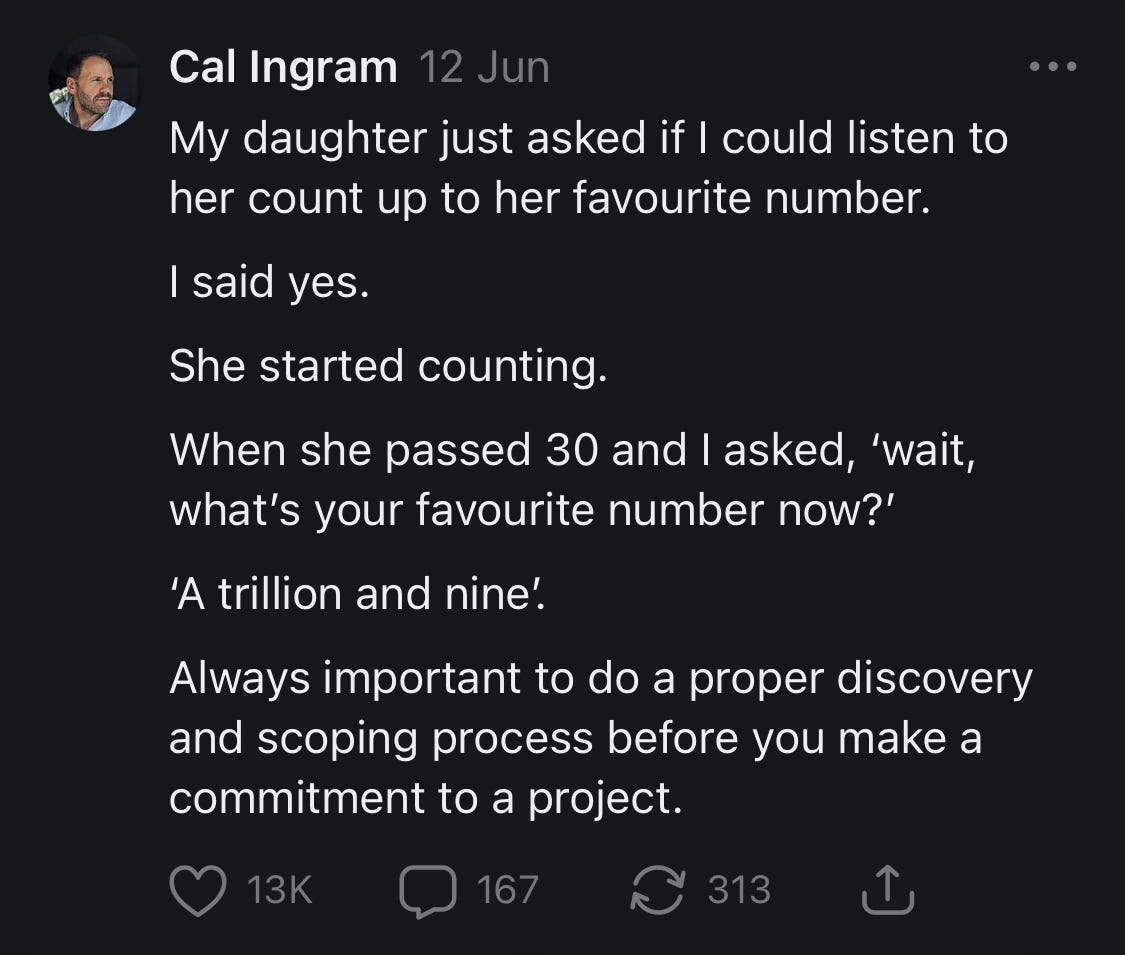
The message from the algorithms is clear: personal stories perform, expertise doesn't. When a thoughtful article gets modest engagement but your dad moment goes viral, it's hard not to notice a pattern. The platforms reward connection over competence, relatability over rigour.
Building an audience from zero means constantly confronting the temptation to share more of yourself. Let people into your daily life, your struggles, your behind-the-scenes moments. The engagement is immediate and addictive - comments saying "this resonates with me," new subscribers drawn to your authenticity, that little dopamine hit that comes from human connection at scale.
This feels like being pushed toward celebrity mode - making your personal life the product rather than your thinking.
Why celebrity feels like control
There's a psychological trap here that explains why the celebrity path feels so appealing. It seems like more control because the feedback is immediate and quantifiable. You post a personal story, watch the engagement metrics climb, and feel like you're mastering the system. Fame - building recognition for competence - offers slower, less obvious rewards. It's the difference between the instant gratification of social media likes and the delayed satisfaction of someone implementing your ideas six months later.
Research on attention and reward systems shows how powerful this immediate feedback can be. We're wired to respond to quick positive reinforcement, even when the long-term consequences might be less favourable. Celebrity provides that hit; fame requires patience and faith that expertise will eventually be recognised.
And most of us have no real reference point for what sustained public attention actually feels like. We base our desire for celebrity on brief positive experiences - a viral post, recognition from strangers, that moment of delusion in Starbucks. These micro-doses might feel good, but they don't prepare you for the psychological reality of constant performance.
Personally I've only had tiny tastes of this, but when a piece gets shared widely, suddenly everyone has opinions not just about the ideas but about me. People make assumptions about my motivations, my background, my character based on a few hundred words. It's simultaneously engaging and exhausting, and that's with an audience measured in hundreds, not hundreds of thousands.
The platform choice matters
This dynamic plays out differently depending on where you build your audience. TikTok and Instagram essentially demand celebrity mode - their algorithms reward personal content, lifestyle glimpses, and personality-driven entertainment. You can't really build a following on TikTok without performing some version of yourself.
Substack traditionally offers a different path. You can build substantial readership whilst remaining relatively mysterious about your personal life. The platform rewards depth and consistency over personality performance, though Notes has started to blur that line. LinkedIn probably sits somewhere in between - professional personal stories work well, but you're not expected to share your breakfast or your relationship status.
I've chosen Substack as my primary platform partly because it enables the fame route - recognition for thinking and writing rather than access to my daily life. But I'd be lying if I said the celebrity path doesn't look appealing when I see creators with massive followings built on personality-driven content.
The impostor syndrome escape
There's another reason celebrity feels more achievable than fame: it seems easier to be interesting than a genuine expert. Anyone can share their struggles, their behind-the-scenes moments, their relatable failures. Building fame through competence feels more daunting because you're claiming expertise that others might challenge.
I feel this tension constantly. Writing about business strategy or cultural analysis feels presumptuous - who am I to have opinions about complex systems? But sharing my personal experience with founder isolation or parenting moments feels authentic and accessible. The celebrity path offers an escape from impostor syndrome by making personality rather than expertise the product.
But this is the trap. Celebrity-mode creators often find themselves unable to evolve beyond the personal brand they've created. If your audience follows you for lifestyle content, it becomes difficult to pivot toward more substantial work without losing engagement.
My experiment
So here's what I thought I was trying to do: build recognition for thinking rather than access to my life. When I write about founder isolation, I share personal experience in service of broader insights rather than making my personal story the main attraction. When I analyse cultural trends, I ground the ideas in research whilst acknowledging the limitations of my perspective.
It's definitely a slow burn. My engagement rates would probably be higher if I shared more personal content, more behind-the-scenes glimpses, more lifestyle elements. The dad story that went viral proves this point perfectly - people responded to the human moment, not the business insight I tried to sneak in at the end.
But here's where my neat binary starts falling apart.
The messy reality
That viral dad story wasn't lifestyle performance or access to my personal life for its own sake. This wasn't a cute parenting moment with business wisdom awkwardly tacked on. The parenting moment was the business insight. A child's naturally shifting goalposts during a simple counting game revealed something profound about how projects expand when you don't establish boundaries upfront.
People didn't just engage with the adorable factor - they engaged with the strategic thinking it demonstrated.
In the comments people shared their own scope creep horror stories, consultants shared discovery processes, parents recognised the same pattern in their own lives. Some converted to subscribers, maybe because this showed a way of seeing business patterns in everyday life that resonated with them.
Maybe the real skill isn't choosing between chasing fame or celebrity, but being intentional about what, when and why you share. Using personality and personal experience as a bridge to deeper work rather than avoiding it entirely or making it the whole product.
Effective creators like James Clear seem to innately understand this. They're not mysterious figures hiding behind their expertise, nor are they performing their entire lives for engagement. They share enough of themselves to create genuine connection whilst keeping their substantial work as the core value proposition.
The intentional middle path
What I'm actually trying to build, I now realise, is something more nuanced than pure fame-seeking. Personal moments help with discovery - someone finds me through a relatable story on Notes, gets interested in my perspective on creator economics or business strategy, then converts to a subscriber or reaches out about working together because of the depth of the thinking, not the access to my life.
The personality elements serve awareness and connection. The expertise drives interest and action. They're not competing approaches but complementary parts of a more sophisticated system.
This feels more sustainable and more aligned with what I actually want to build. I'd rather spend most of my time getting better at thinking and writing than optimising my personal brand for algorithmic engagement. But completely avoiding personal connection would make the work feel sterile and probably less discoverable.
The celebrity path will always be there if this doesn't work out. The algorithms will keep rewarding personal content, and there will always be another platform optimised for personality performance. But the middle path - intentional personality in service of substantial work - feels like it offers the best of both approaches whilst avoiding the traps of either extreme.
Even that moment with the Starbucks barista makes more sense now. In my brief delusion, I was imagining recognition for something I'd written that happened to reveal something personal about my experience as a founder and parent. The personal element made the insight more memorable and relatable, but the insight was still what I hoped she'd remembered.
That's worth building toward, even if it takes longer to achieve and requires more careful navigation than simply choosing one path or the other.
I believe the most valuable insights come when thoughtful practice is applied in the real world. That's why I'm documenting my own journey of navigating the creator economic, growing a consultancy, and sharing both the successes and the learning moments as they happen.
I help service business founders build functional systems and distinctive positioning through my consultancy, Designing Value. My approach prioritises practical strategy over generic solutions.
Sources:
Was interesting to hear your thoughts on this Cal!
Definitely a decision everyone of us has to make (and not just once). I have also started to share more about my own life without thinking too much about the consequences. It's what people want to hear, they are seeking human connection.
But at the same time you can't take it back once it's out there. Appreciate the impulse to think about it again mate!
This was a great read. It does seem that there’s this constant tug-of-war between sharing the personal because it connects quickly, and staying rooted in expertise because that’s where the supposed deeper value lives. When a personal story reveals a broader truth, it becomes a teaching tool.